
How to Tell Whether a Pet Coat Needs Brushing, Combing, or a Pause
A grooming session can look simple from the outside: pick up a brush, move through the coat, and finish when…
A grooming session can look simple from the outside: pick up a brush, move through the coat, and finish when the fur looks neater. In real practice, the better first question is not “What tool should I use?” but “What is the coat telling me right now?” A pet coat may need loose hair removed, a deeper comb check, a slower section-by-section approach, or no more handling for the moment. Learning to notice that difference helps beginners avoid pulling, rushing, and turning a small grooming task into a stressful one.
Begin with your hands and eyes before the slicker brush or pin brush. Look at the coat direction, the areas where fur sits flat, and the places where it bunches or separates. Run your fingers lightly over the coat without digging into the skin. A coat that feels smooth on top may still have undercoat buildup or small tangles close to the body, especially behind the ears, under the legs, around the collar area, and near the tail. If the pet shifts away, freezes, licks their lips, or keeps turning their head toward the area, that information matters as much as the coat texture.
Brushing is usually the right first action when the coat has loose hair, light surface tangles, or dust sitting through the top coat. The brush should move with the coat direction, not against it in a rough way. Work on a small section instead of sweeping over the whole body quickly. If the brush moves through without snagging and the skin underneath looks comfortable, you can continue for a few strokes. If the brush keeps catching in the same place, pressing harder is not the answer. That is the moment to slow down and check what is happening below the surface.
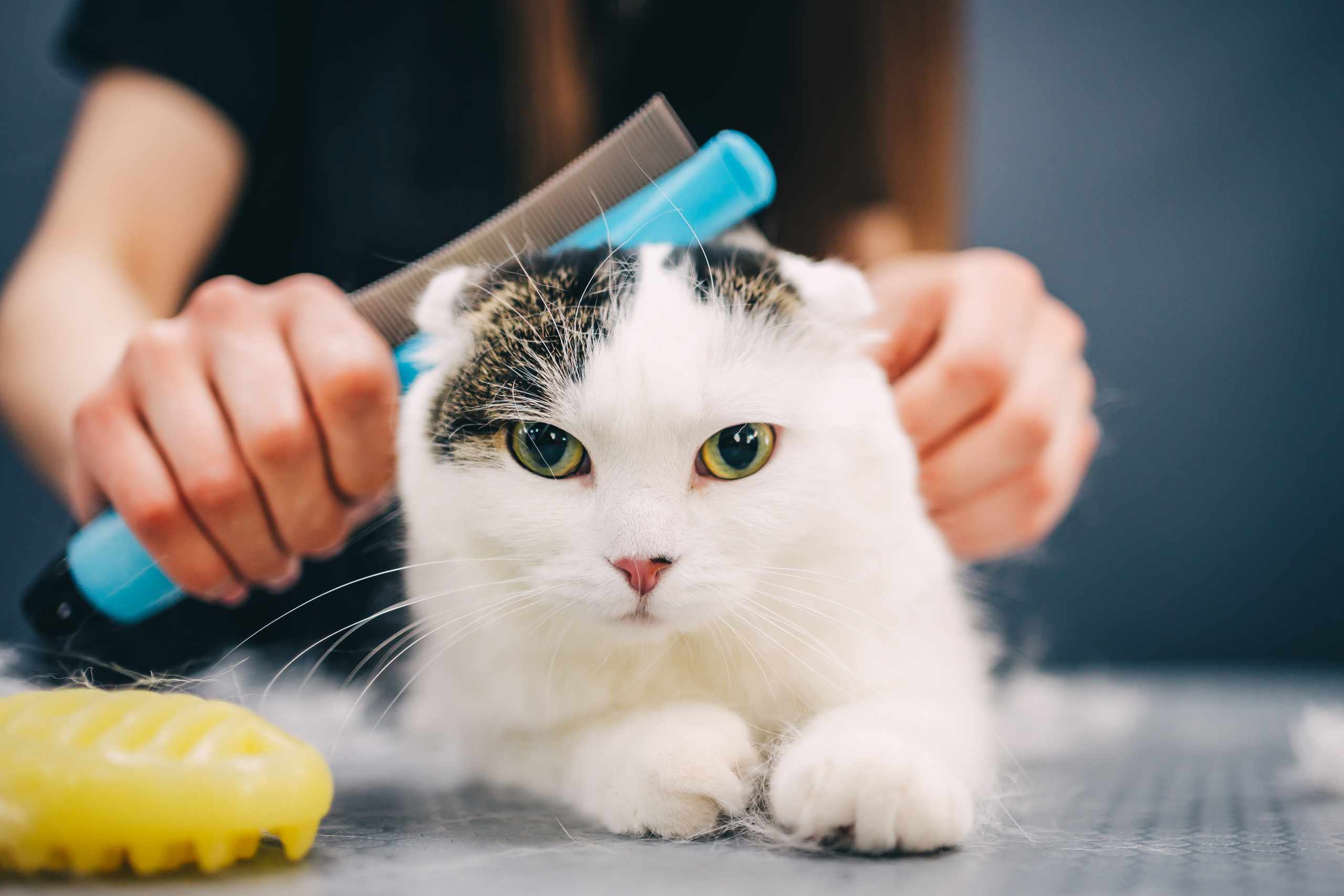
A metal comb gives you a clearer answer after brushing. Use it gently after a few brush strokes, letting it pass through the same small section. If the comb glides from the outer coat toward the lower layers without stopping, the area is probably ready to move on. If it catches, lifts the coat, or stops near the skin, there may be a tangle that brushing did not solve. This is where many beginners discover that a coat can look tidy while still holding hidden knots underneath. The comb check is not a punishment for the coat; it is a quiet test that tells you whether the brushing actually reached the area that needed attention.
A pause is the safest choice when the coat resists and the pet is also showing discomfort. A mat close to the skin, a sensitive paw area, a damp tangle after bathing, or a pet who keeps pulling away can all be signs that the task should not continue in the same way. Pausing does not mean you failed. It means you noticed a stopping point. Some mats are not suitable for beginner handling, and trying to force through them can pull skin or make the next grooming session harder. In those cases, the better decision is to stop and ask a qualified professional for help.
To practice this skill, choose one easy coat section rather than the whole pet. Prepare a non-slip mat, a brush, a metal comb, and a towel if needed. Look first, touch lightly, brush a few slow strokes, then use the comb check. After that, decide what the section needs: a few more gentle brush strokes, a careful comb-through, or a break. Keep the session short enough that the pet can stay calm. A few well-observed minutes are more useful than a long session where both learner and animal become tense.
One sign of improvement is that your decisions become smaller and more specific. Instead of thinking, “This pet needs grooming,” you begin to notice, “This shoulder area brushes easily, this ear area needs a gentler comb check, and this tight spot should wait.” That kind of observation is the base of safer coat care. The goal is not to finish every task at once. It is to understand what the coat and the pet are showing you before your hands move to the next step.